Bearing Surfaces That Meet Engineering Standards
Foundation Excavation in Ashley for new construction and additions that require stable, load-bearing subsoil
New construction on rural Gratiot County lots often sits on soil with mixed topsoil and clay, and the excavation has to reach firm subsoil rather than stop at the first layer of organic material that won't carry the load. Keller Bros cuts to the depth the foundation engineering requires and leaves a firm, level bearing surface for the concrete crew. The work matters for any homeowner building on a lot where the first twelve inches of ground is organic field topsoil rather than the compacted subsoil a footing needs.
The crew stakes the footprint, excavates to the specified depth, removes organic topsoil, and trims the perimeter cleanly so the forms sit flush against undisturbed earth. Spoil is hauled or spread on site as agreed, and the bottom is checked before forms go in. The depth follows the engineer's plan rather than a fixed number, because the firmness of the bearing layer changes from one lot to the next.
Request a free estimate to confirm excavation depth and spoil handling for your lot.
What Proper Excavation Requires
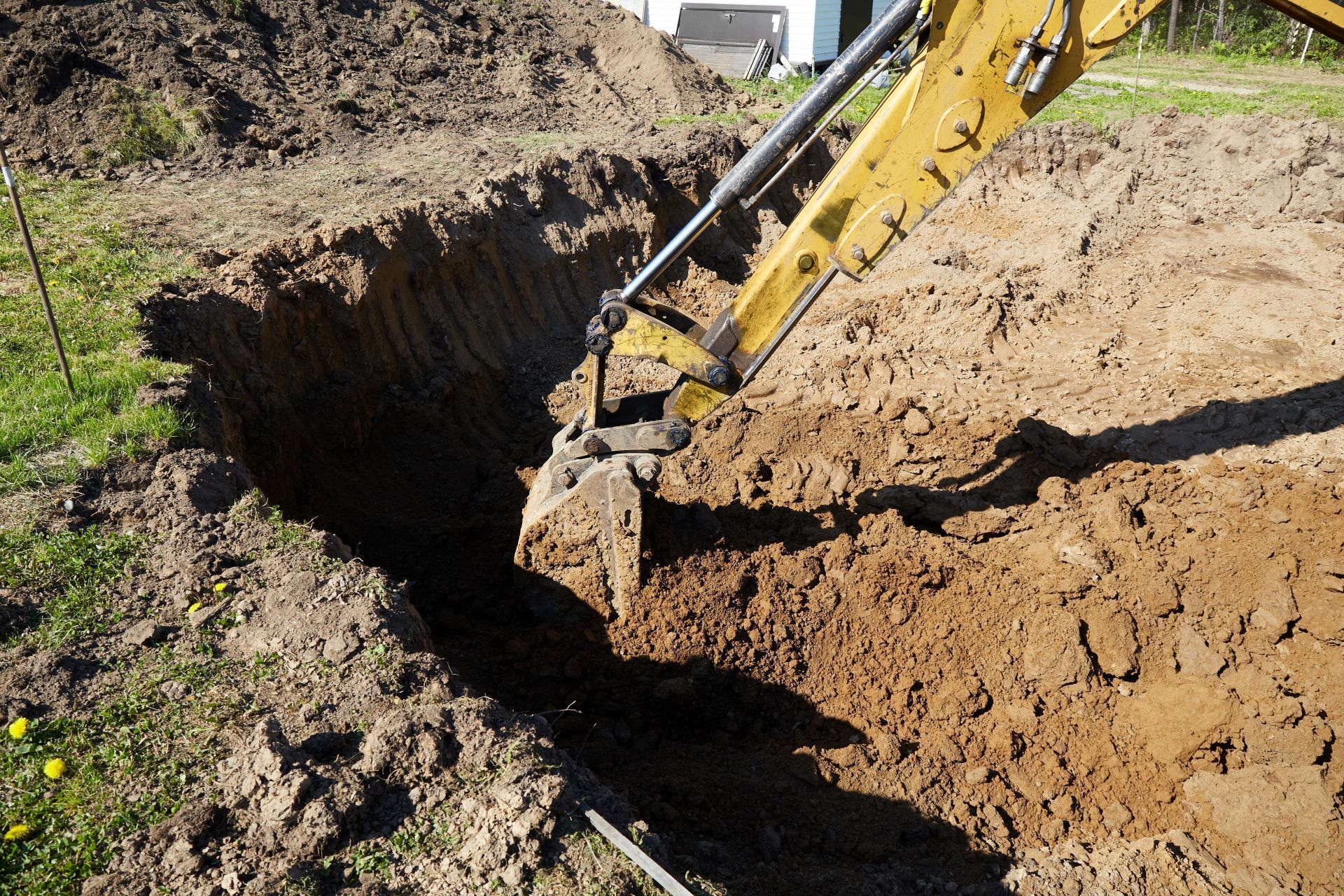
The crew walks the staked footprint and digs to the depth called out on the foundation plan, stopping when they reach subsoil that resists the bucket and holds its shape. Organic topsoil is separated and removed from the bearing surface so the footing rests on material that won't compress or settle once the building loads it.
Once the excavation is complete, you notice clean, vertical walls at the perimeter and a flat, dry bottom that matches the planned elevation. The concrete forms fit tight against the trimmed edges without gaps, and the footing pours onto undisturbed soil rather than loose fill.
The service includes staking, excavation to specified depth, spoil management, and perimeter trimming. Hauling spoil off site or spreading it in designated areas is confirmed in the estimate before work begins, so there is no question about what happens to the material removed.
Answers About How the Work Is Done
Foundation excavation on rural Ashley lots often involves removing more topsoil than expected, because decades of farm use built up an organic layer that has to come out before reaching stable ground.
How deep does the excavation go for a typical house foundation?
Depth follows the engineer's specifications and the point at which the subsoil becomes firm enough to support the footing load without settling, which varies by lot.
What happens to the topsoil and clay removed during excavation?
The crew hauls it off site or spreads it on the lot as agreed in the estimate, and the plan is confirmed before the first bucket of material moves.
How is the bearing surface checked before concrete work begins?
The bottom is visually inspected and tested with the excavator bucket to confirm it resists pressure and holds its shape without soft spots.
What preparation is needed before the excavation crew arrives?
The building footprint should be staked by the surveyor, and any underground utilities should be marked so the crew knows where to dig and where to avoid.
What does a properly prepared excavation look like once finished?
You see vertical walls trimmed flush to the stake lines, a flat bottom at consistent elevation, and no loose soil or standing water where the footing will be poured.
Keller Bros also performs foundation excavation in Alma, Pleasant, Ithaca, St. Johns and Breckenridge. Call (989) 331-1868 for a free estimate that breaks out excavation depth, spoil handling and any additional clearing required for your site.