Bonded Ice Broken and Cleared
Ice removal in Ashley for driveway access, steps and walkways where ice has hardened and bonded to the surface
The crew at Keller Bros assesses where ice has bonded hardest, breaks it up with the appropriate tools, clears the debris, and treats the surface afterward if you want it. Priority usually goes to driveway access, steps, and walkways, and pricing is quoted after a look at the property. This family-run business offers free estimates on all work and handles ice that has formed after repeated freeze-thaw cycles or been compressed by traffic into a layer that will not respond to salt alone.
Ice forms a mechanical bond with concrete and asphalt when meltwater seeps into surface pores and refreezes, and that bond strengthens with each freeze cycle until the layer resists chemical treatment. The crew uses chipping bars, ice scrapers, and mechanical breakers depending on ice thickness and surface type, working systematically from high-traffic zones outward to avoid creating uneven patches that become new slip hazards.
Schedule a property assessment to determine which surfaces require mechanical removal and whether post-treatment is needed.
What Removal Involves and What Changes Afterward
Breaking bonded ice requires different tools depending on thickness and pavement condition—thin layers on asphalt respond to flat scrapers, while thicker buildups on concrete may require chipping bars or mechanical breakers that fracture the ice without damaging the underlying surface. The crew removes the broken ice debris and hauls it to a drainage area or piles it where melt will not refreeze across cleared zones.
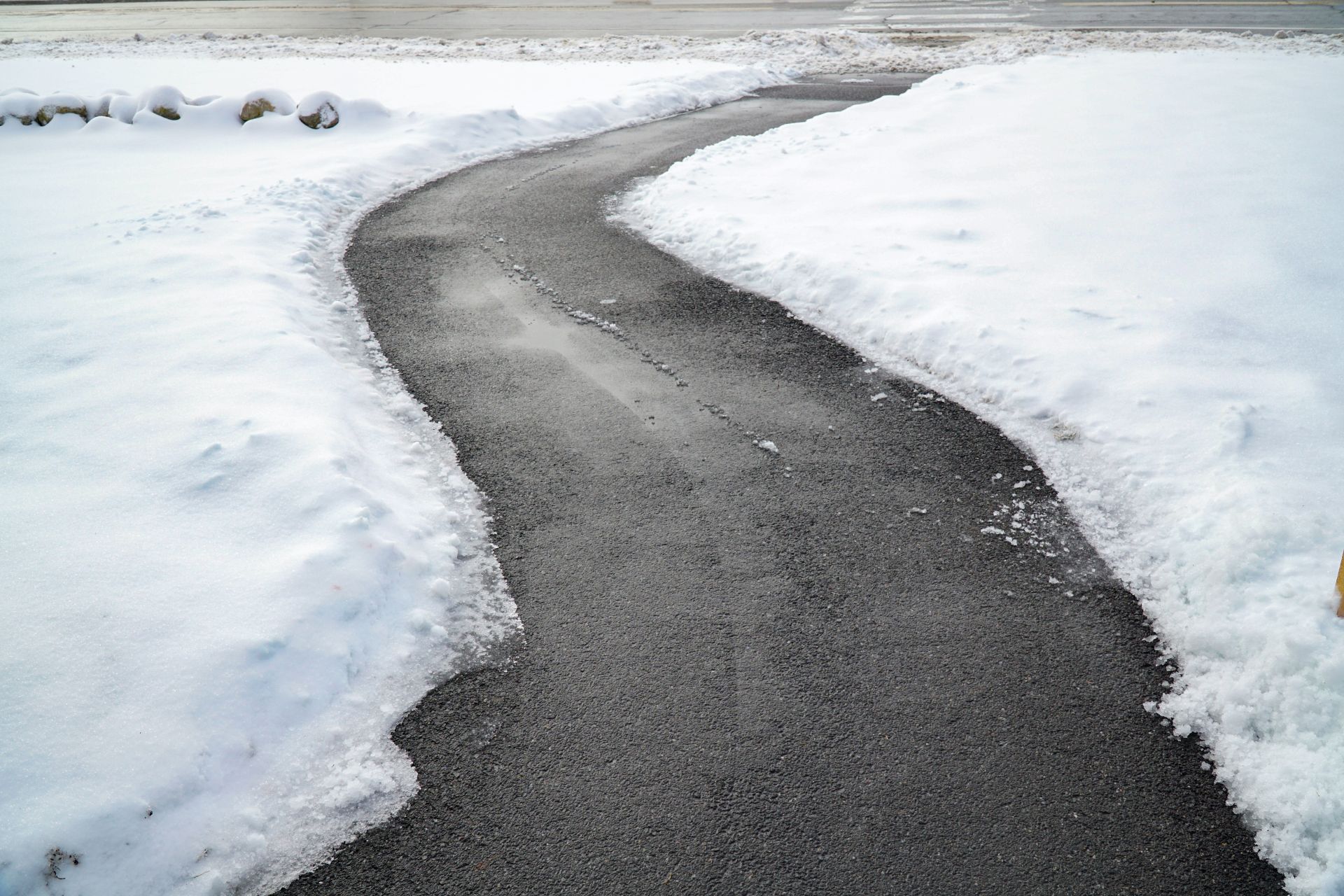
Once the ice is removed, the pavement is visible again, traction is restored for foot and vehicle traffic, and any treatment applied afterward works directly on the surface rather than sitting on top of an ice layer. Steps become passable without requiring handrail reliance, driveway slopes regain grip for tires, and walkways no longer require shuffling or avoidance routes.
Post-removal treatment with salt or sand is optional but recommended when forecast conditions favor another refreeze cycle. The crew confirms whether treatment is included or billed separately during the estimate, and you decide based on expected weather over the following days.
Questions Before Starting Your Project
Ice removal in Alma and Breckenridge often addresses surfaces where repeated freeze-thaw cycles have created a thick, traffic-compacted layer that resists standard clearing methods.
What tools does the crew use to break up bonded ice?
Chipping bars, flat scrapers, and mechanical ice breakers are selected based on ice thickness and pavement type, with care taken to fracture the ice without gouging or cracking the underlying surface.
How does the crew avoid damaging concrete or asphalt during removal?
Tools are angled to lift ice rather than dig into pavement, and pressure is adjusted based on surface condition—older concrete with existing cracks requires lighter touch than newer asphalt.
When is mechanical ice removal needed instead of salting?
Mechanical removal is required when ice has bonded too deeply for salt to penetrate in a reasonable timeframe, typically after multiple freeze-thaw cycles or heavy traffic has compressed the layer.
What happens to the ice debris after it is broken up?
Debris is cleared from the work area and either hauled off or piled in a drainage zone where melt will not flow back across cleared surfaces and refreeze.
Should you treat the surface after ice removal to prevent re-icing?
Treatment is recommended if overnight temperatures will drop below freezing again, as the freshly cleared surface will be damp and prone to forming a new ice layer without chemical interruption.
Keller Bros also performs ice removal in St. Johns, Mt Pleasant, Ithaca, Alma and Breckenridge. The crew provides free estimates and confirms which surfaces require mechanical clearing and whether post-treatment is part of the quoted work.