Surfaces Treated Before Ice Forms
Snow salting in Ashley for long gravel approaches and older concrete slabs that hold meltwater and refreeze into a sheet overnight
Long gravel approaches and older concrete slabs in rural Gratiot County tend to hold meltwater and refreeze into a sheet overnight, which is the condition salting is meant to interrupt. Salt is applied after snowfall and before refreeze to keep ice from bonding to concrete and asphalt, so the next clearing is easier and slips are less likely. Keller Bros is a family-run operation that offers free estimates and spreads salt by hand or spreader after a snowfall or ahead of a forecast freeze, with coverage planned per property.
The crew surveys the surfaces to be treated, marks the driveway, walkways, and entry points, then applies salt where meltwater collects or where foot traffic and vehicle use create compaction that accelerates ice formation. You can request a one-time application or a seasonal schedule, and the crew adjusts the spread rate based on pavement type—concrete absorbs moisture differently than asphalt, and gravel requires lighter application to avoid runoff into soil.
Arrange a site review to identify which surfaces need treatment and whether per-application or seasonal scheduling fits your freeze pattern.
How Salting Prevents Ice Bonding
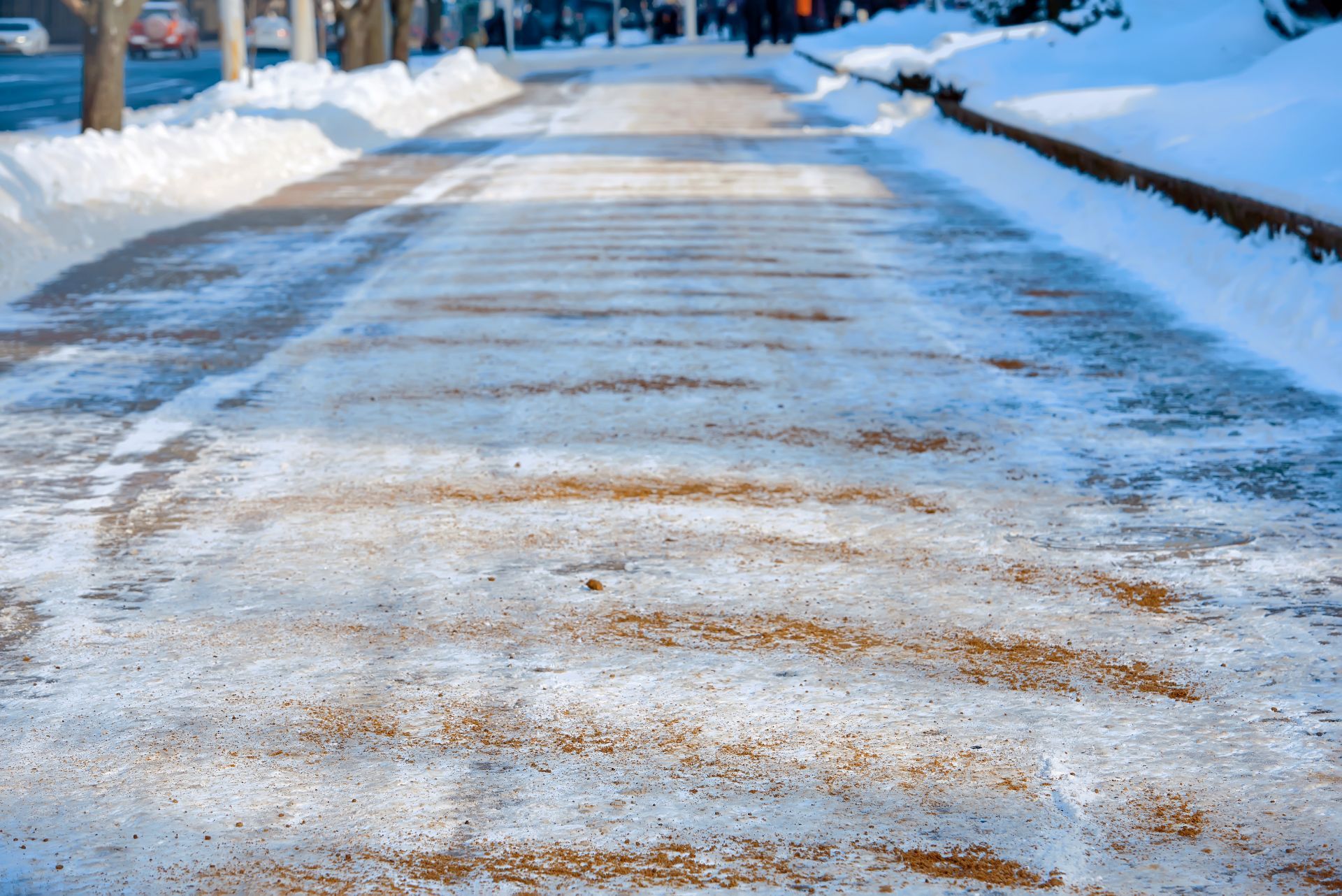
Salt lowers the freezing point of water, so meltwater remains liquid longer and does not bond to pavement as temperatures drop overnight. When applied after a plow pass or light snowfall, the chemical action keeps the surface layer wet instead of frozen, and subsequent clearings remove slush rather than chipping away at a bonded ice layer.
After treatment, driveways and walkways stay safer underfoot, vehicle tires maintain better traction during freeze cycles, and the next snowfall is easier to remove because ice has not created a base layer. Steps, landings, and sloped walkways remain passable without requiring repetitive chipping or scraping between storm events.
Application timing matters more than volume—salt spread before a refreeze works better than heavier amounts applied after ice has already formed. The crew monitors forecast low temperatures and applies treatment when conditions favor overnight refreezing, particularly after daytime thaw or light precipitation that leaves surfaces damp.
Common Questions About This Service
Salting in Ashley and Bannister often targets entry points and sloped sections where meltwater naturally migrates and refreezes first.
What areas of a property are treated during a salting visit?
The crew focuses on driveways, walkways, steps, and any slope or low area where water pools and refreezes, with entry points and high-traffic zones receiving priority coverage.
How does the crew determine how much salt to apply?
Spread rate depends on pavement type, forecast low temperature, and whether the surface is already wet—concrete and asphalt require different coverage, and gravel needs lighter application to prevent runoff.
When should salt be applied relative to snowfall or temperature changes?
Salt works best when spread after a plow pass or light snowfall and before overnight temperatures drop below freezing, interrupting the refreeze cycle before ice bonds to the surface.
What happens if salt is applied too late, after ice has already formed?
Salt applied to existing ice takes longer to work and may not fully break the bond, so mechanical removal is often needed first, followed by treatment to prevent re-icing.
How do you decide between one-time application and a seasonal schedule?
Seasonal schedules work well if your property experiences consistent overnight refreezing after most storms, while one-time service suits isolated freeze events or properties where conditions vary widely.
Keller Bros also performs snow salting in Mt Pleasant, St. Johns, Ithaca, Alma and Breckenridge. Free estimates are provided after the crew reviews your property layout and the surfaces requiring treatment.